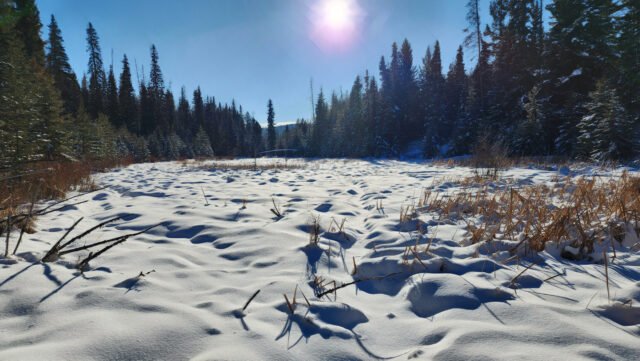
When snow covers the trails we can hike on the snow in boots, we can wear traction devices on our boots and use poles for stability, or we can snowshoe trails at higher elevations.
- For local hikes, we can still use the list of Shoulder Season Fall Hikes
- For snowy days, spikes may be a better choice when hiking hilly routes.
- Once the snows have fallen at higher elevations, we need to wait for the snowpack to set up which comes from the weight of the snow, melting and freezing, and treading on the trails and tracks. Once the snowpack is ready, we can snowshoe.
- Although we can snowshoe routes lower down, it is usually better to snowshoe established routes which are stomped in by other snowshoers. Fat tire bikes often help with setting up the snow for snowshoeing too. A list of some of these areas is shared here.
| Bush Lake Trails | Dogwood Marshes Trails | Stake Lake Trails |
| Lac le Jeune Trails | Lodgepole Lake Trails | McGillivray Lake Trail |
| Hull Hill Trails | Ridge Lakes | Chuwhels Mountain Road Trails |
| Upper Lac du Bois routes | snowed-in backroads | and others |
More updates to this page coming…